
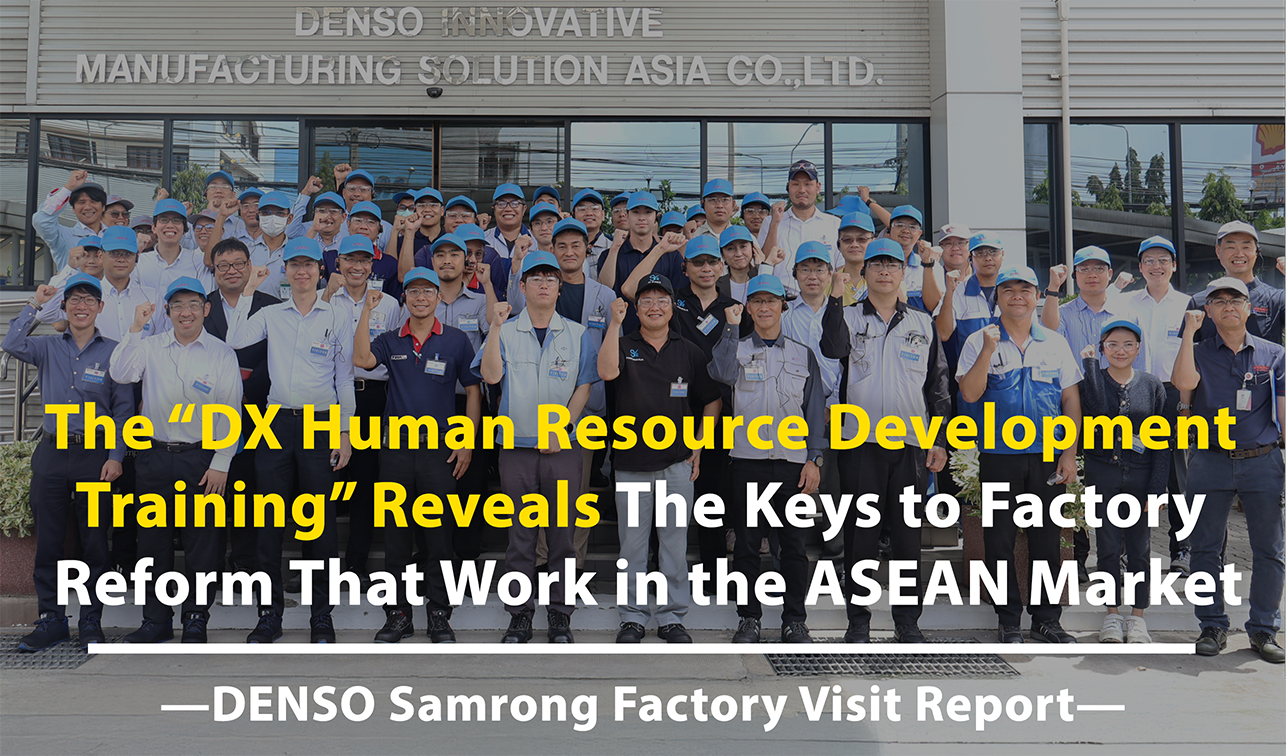
DENSO Thailand, a leading manufacturer, is currently implementing the “DX Human Resource Development Training” (subsidized by the Government of Japan) in collaboration with AEM-METI Economic and Industrial Cooperation Committee (AMEICC).
On August 7, a site visit took place at one of the training venues, the Samrong Factory. With over 50 years of history, the company welcomed participants to witness firsthand how digital transformation (DX) has been introduced into its operations. Attendees also had the chance to explore the facilities and engage directly with on-site leaders, gaining valuable insights into the practical application and benefits of DX.
The Samrong Factory was established in 1970 as the DENSO Group’s first overseas production base. Starting with just 100 employees, it has grown over half a century into a workforce of around 4,000. Today, it hosts Denso Innovative Manufacturing Solution Asia (DIMA), which is responsible for manufacturing equipment, molds, and tool production within the group. The factory now plays a key role in driving manufacturing improvements and human resource development across DENSO’s operations throughout the Asian region.
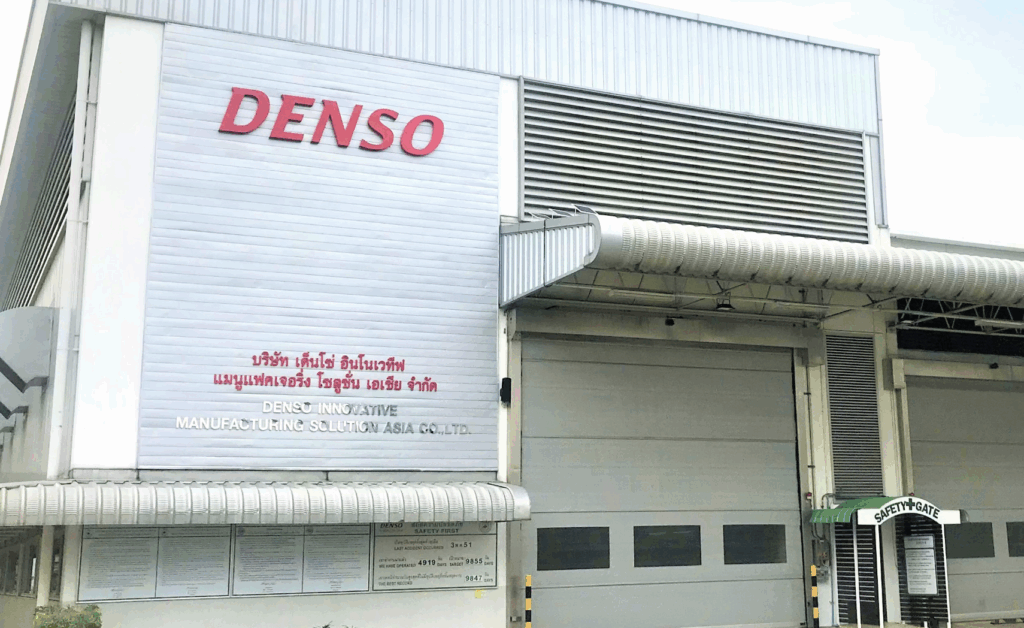
Samrong, Samutprakarn Province Factory Visit
(Photo/Information provided by Denso (Thailand) Co., Ltd.)
In addition to manufacturing molds and automation equipment, DIMA is also engaged in solution businesses that enhance productivity in supply chains and manufacturing sites in Thailand. These include initiatives such as LASI (Lean Automation System Integrator)—a human resource development program established through Japan–Thailand collaboration to build “Lean Automation” systems that eliminate waste and enable highly efficient automated production, as well as the use of IoT.
During the visit, Mr. Viwat Pantsra,, Vice President of DIMA, delivered the opening remarks. Speaking from experience, he emphasized that the foundation of realizing DX lies in “improvement” and “people.” He also revealed the concept of reorganizing the Samrong Factory into an educational hub equipped with open-factory and showroom functions. He encouraged participants by saying, “If you have any insights or suggestions during this factory tour, please feel free to share them.”
As part of its regional strategy in Asia, DENSO has outlined three key pillars:
(1)Promoting carbon neutrality
(2)Driving manufacturing innovation unique to ASEAN
(3)Addressing social issues
Within this framework, DIMA identifies human resource advancement as the most effective response to the external factors shaping the Thai market, including:
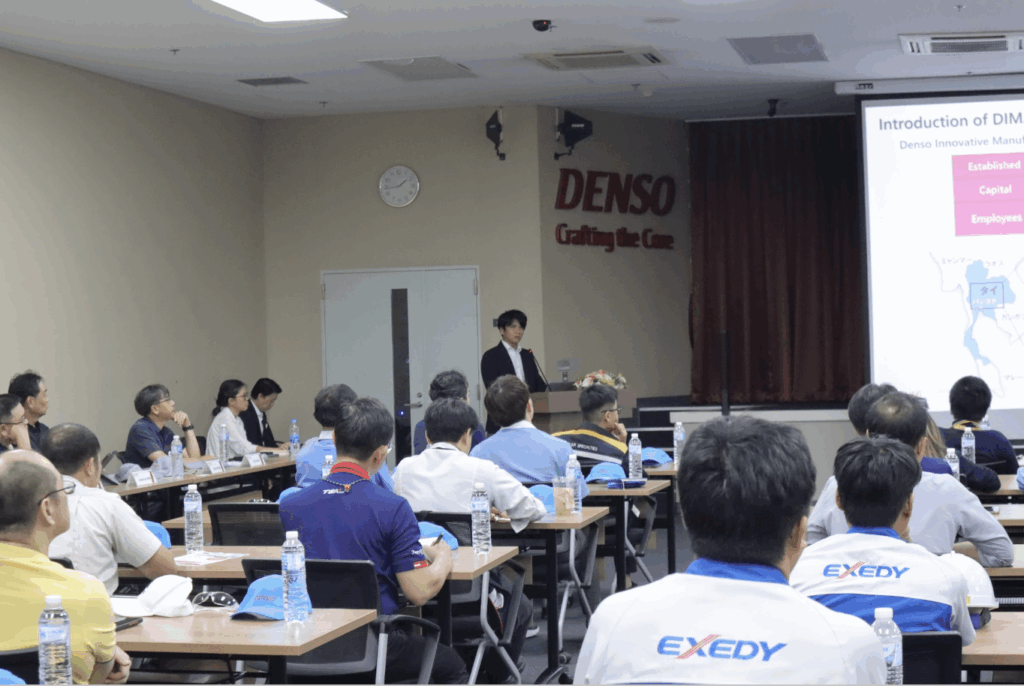
Mr. Keisuke Sarushima, General Manager of DIMA, noted, “While Thailand benefits from an abundant labor force, moving forward, the key challenges across Asia will be the development of skilled talent, responsiveness to product changes, work style reforms, and adapting to technological progress.”
With this in mind, DIMA has launched open-innovation style training programs based at the Samrong Factory. By sharing its mold technologies and expertise in production improvement beyond the company, DIMA aims to strengthen the competitiveness of the manufacturing industry across ASEAN as a whole.
Inside the Samrong Factory, which served as the site of the tour, a spacious Co-Creation Lab is fully equipped, where active engineers provide instruction combining classroom learning with on-the-job training (OJT). Participants can deepen their understanding by directly handling equipment and tools while learning through practical on-site experience.
Notably, the growth process of “being taught (acquiring knowledge),” “trying it out (practicing on site),” and “being able to do it independently (self-sustaining)” is incorporated into all programs. The learning continues until it can be applied to each company’s own site, directly leading to the creation of results. Building such an educational system in-house—supporting everything from the basics to on-site application in an integrated manner—is not easy for many companies.
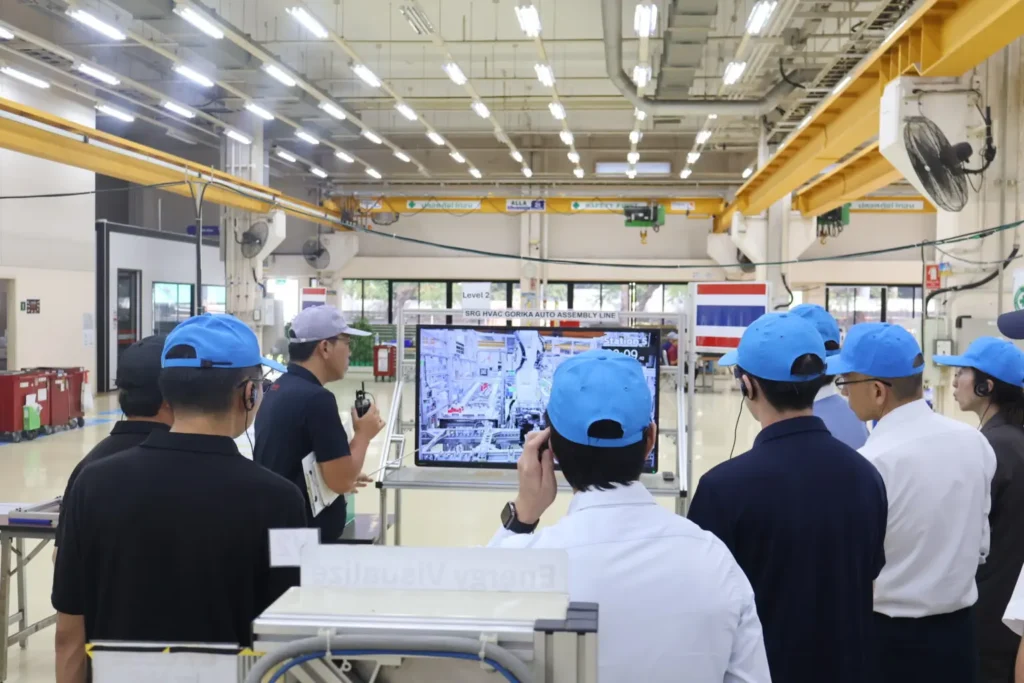
The training content covers a wide range, from on-site improvement to advanced automation. For example, in automated manufacturing processes using robots, the approach of “one robot for one part,” as practiced at the Japan headquarters, has been adapted in an ASEAN style to achieve “Lean Automation with one robot manufacturing three parts.” This mechanism, which reduces costs while improving efficiency through human ingenuity, can be considered a reproducible success model for DX in ASEAN manufacturing.
Through these efforts, DENSO Thailand demonstrates the value of developing skilled talent and promoting lean practices under the LASI system, thereby strengthening the competitiveness of the region’s manufacturing sector.
Participants shared impressions such as: “I was able to learn the details of improvement processes used by major companies,” “I realized there are things even small businesses can implement,” and “I was surprised by the open style of the training and would like to take this back to my company for further consideration.”
During the networking session after the factory tour, DIMA members and participants exchanged challenges and ideas, reflecting Vice President Viwat’s message that “continuous improvement must become a habit.”
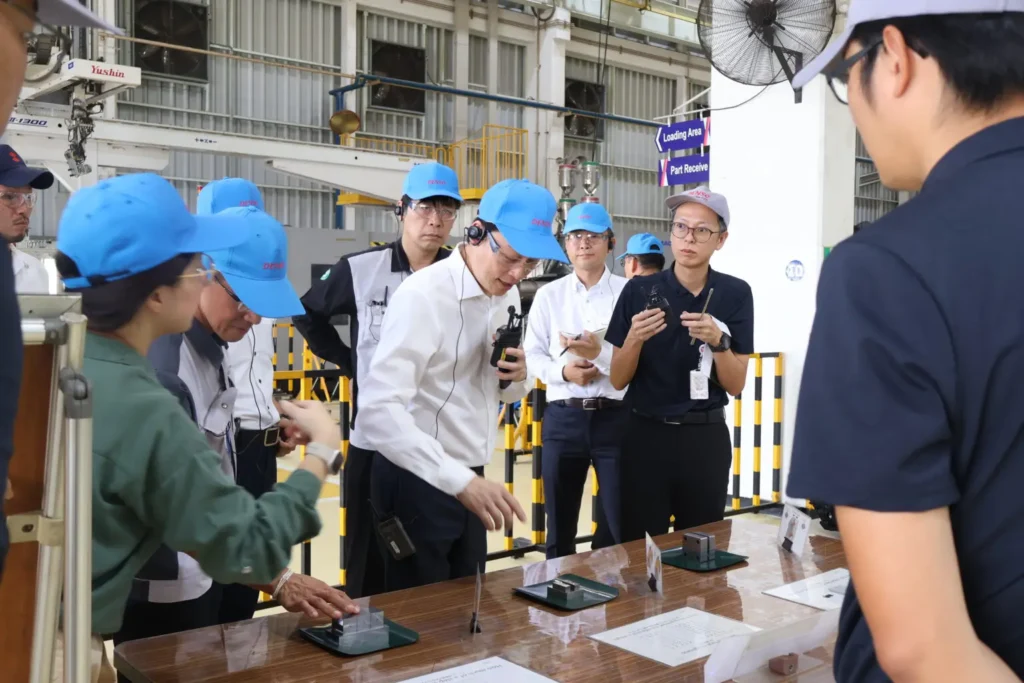
DENSO’s DX Human Resource Development Training combines case studies of the latest technologies with a culture of continuous improvement, offering a hands-on learning experience that directly connects acquired knowledge to workplace practice. The initiative to reorganize a long-established factory into an educational hub demonstrates that, in a manufacturing industry where technological innovation is accelerating and the competitive environment is changing, the ability to nurture talent capable of solving problems on the ground is the decisive factor for successful reform.
The factory tour highlighted both processes and outcomes, offering a practical model of improvement that companies of any size can apply—presenting one path forward for factory reform in ASEAN.
As part of the ASEAN Support Program for GX/DX Human Resource Development implemented by the AEM-METI Economic and Industrial Cooperation Committee (AMEICC) Secretariat and the Association for Overseas Technical Cooperation and Sustainable Partnerships (AOTS), DENSO INTERNATIONAL ASIA CO., LTD provides specialized training programs.
Centered on eliminating waste (Lean) and developing human resources, these programs aim to drive workplace improvement and automation. The company currently offers the following courses:
*Eligibility for Subsidy: Employees of Japanese companies or their supplier companies and interns.
In this video, Mr. Ryosuke Fujioka, former Chief Representative of the AMEICC Secretariat and former Chief Representative of the AOTS Bangkok Office, explains the importance of “locally completed human resource development,” which underpins this training program. Packed with insights on how Japanese manufacturers can survive in the global market, this video is well worth watching alongside the article.
 OPEN CALL
 TRAINING PROGRAM
 SITE VISIT