
 公募情報
 研修プログラム
 視察ツアー
Amid the evolving global landscape and the rapid transformation of global markets, ASEAN’s manufacturing sector is being compelled to undergo structural transformation through green transformation (GX) and digital transformation (DX) . These shifts are driven by increasing demand for greater cost efficiency and reductions in greenhouse gas (GHG) emissions across global supply chains. In response, it is essential to cultivate industry-ready talent and strengthen a human resource development ecosystem through collaboration among governments, industry, and academia. Japan has long supported for ASEAN’s industrial development especially in the automotive manufacturing sector, through investment, technology transfer, and human resource development. As emerging technologies such as AI continue to reshape industrial structures, closer stakeholder collaboration is required to enhance the competitiveness of Japanese affiliated manufacturing supply chains in ASEAN while fostering the next generation of industrial talent. This presents a critical opportunity to discuss the future of ASEAN manufacturing and the talent needed to sustain it.
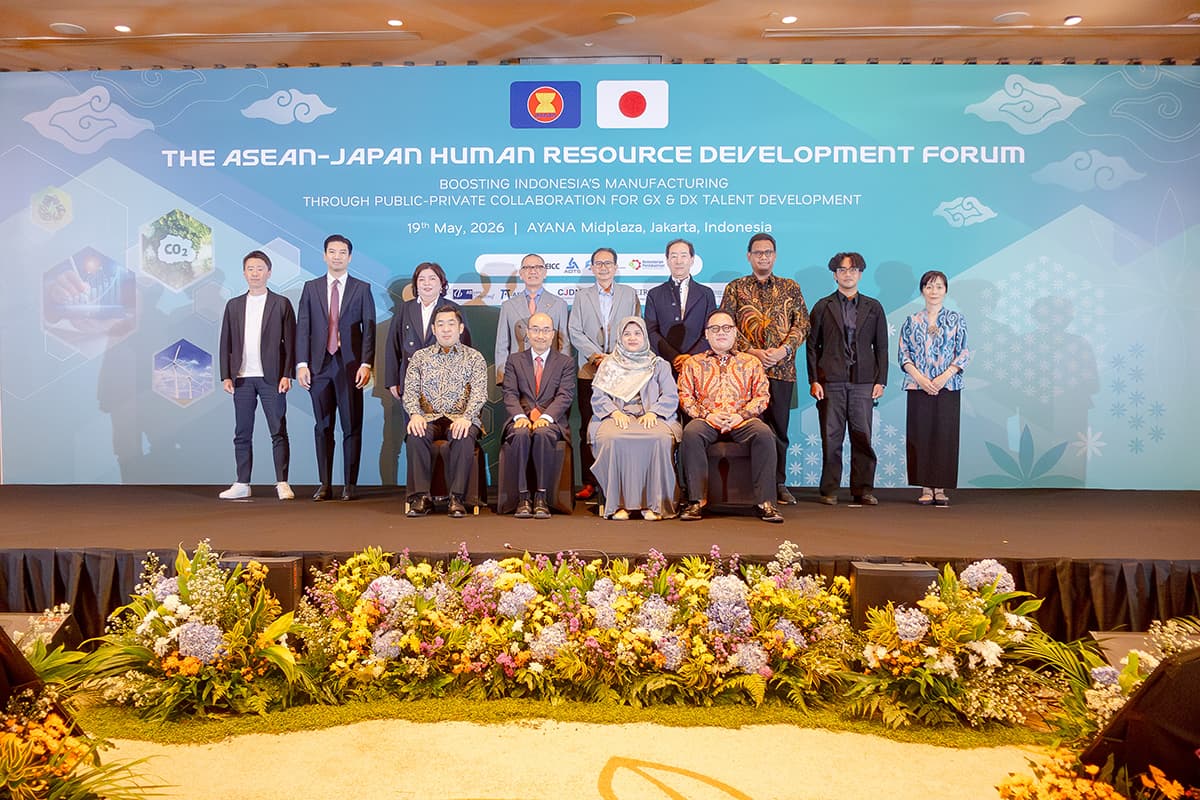
Consequently, the ASEAN-Japan Human Resource Development Forum was convened in Jakarta, Indonesia on 19 May 2026. This hybrid event represented a collaborative undertaking among the AEM-METI Economic and Industrial Cooperation Committee (AMEICC) and the Association for Overseas Technical Cooperation and Sustainable Partnerships (AOTS), the Agency of Industrial Human Resources Development (BPSDMI) under Indonesia’s Ministry of Industry, and Indonesian Chamber of Commerce and Industry (KADIN Indonesia), alongside the representatives from companies, educational institutions and government across ASEAN and Japan. During the event, discussions highlighted opportunities for practical and sustainable human resource development cooperation across the region, particularly Indonesia.
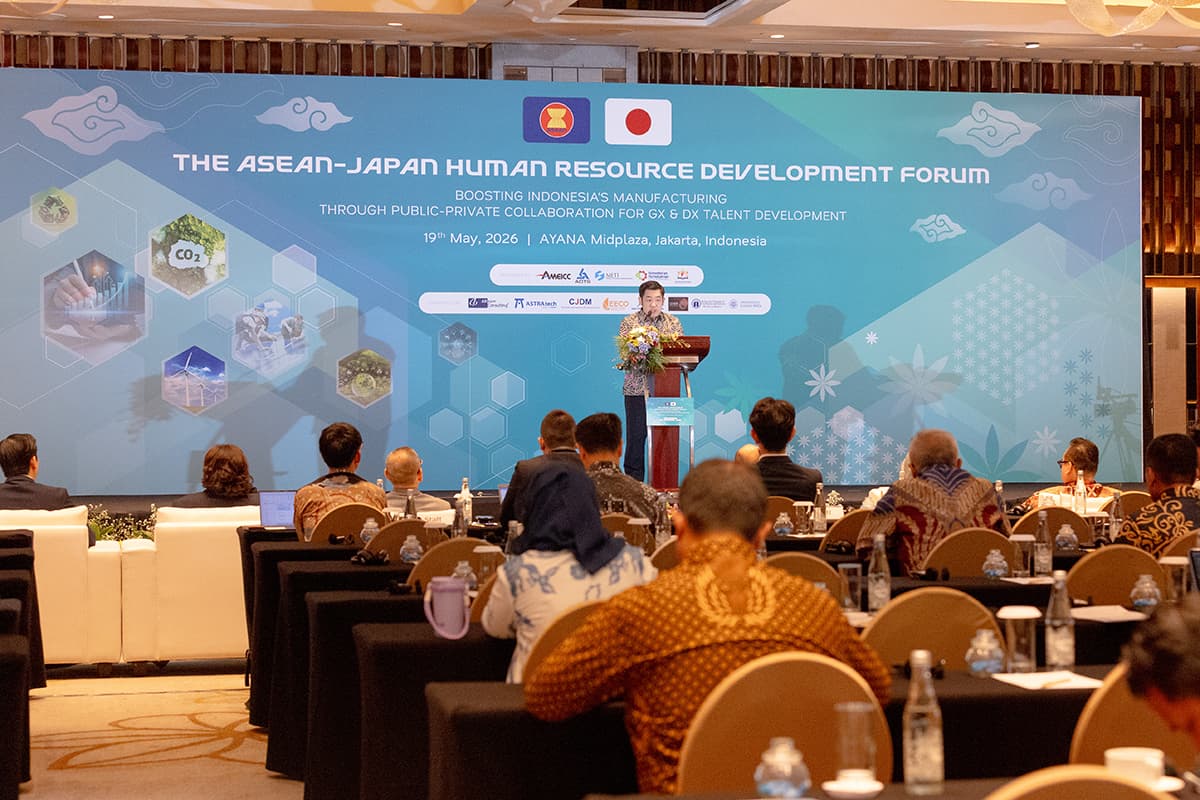
In the opening remarks, Mr. Hirai Shinji, President Director of JETRO Jakarta Office, highlighted that competitiveness in the manufacturing sector is increasingly shaped by the quality of human resources, requiring not only technical expertise but also practical and adaptive talents capable of responding to rapid industrial transformation. In Indonesia, industries are facing growing demand for a more skilled and job-ready workforce, prompting various collaborative HRD initiatives led by government agencies, industries, and academic institutions. Practical efforts by JETRO, METI, AOTS, and the Ministry of Industry (MOI) of Indonesia have focused on strengthening workforce capabilities through internship programs, international training opportunities, and trainer development in 5S, Kaizen, GX, and DX. These initiatives promote a sustainable peer-to-peer knowledge sharing model that enables HR competencies to expand across regions while supporting productivity, quality improvement, and industrial transformation. Strengthened collaboration among governments, industries, and academia will be essential to deepen regional cooperation and support sustainable growth across ASEAN and Japan.
Ms. Wulan Aprilianti Permatasari, Head of Center for Industrial Vocational Education Development, the Agency of Industrial Human Resource Development (BPSDMI), Ministry of Industry, Indonesia, positioned the development of a resilient industrial HR ecosystem as a key national priority to strengthen Indonesia’s manufacturing competitiveness, particularly in Tier 2 and Tier 3 industries. Current challenges include limited digitalization, technological readiness, and shortages of skilled labor, which continue to affect productivity and supply chain resilience. To address these issues, the Ministry has implemented various HRD and industrial training programs in collaboration with educational institutions and AOTS, focusing on IoT, digitalization, green industry, decarbonization, big data and cloud computing. Indonesia’s large young workforce provides strong potential to support future industrial transformation, while continued collaboration among government, industry, academia, and international partners will be essential to strengthen industrial talent, promote knowledge-sharing and enhance long-term industrial competitiveness.
Mr. Tamura Masayoshi, Chief Representative of the AMEICC Secretariat/AOTS Bangkok Office emphasized the importance of integrating lean management, green transformation (GX) and digital transformation (DX) as a comprehensive approach to strengthening industrial competitiveness amid evolving economic and industrial challenges. HRD was emphasized as a key driver to support sustainable industrial transformation across ASEAN. To promote practical HRD initiatives, AMEICC provides financial support covering up to 50% of training costs for standardized training programs delivered by local training providers across ASEAN. The support targets Training for Employees (ToE) and Training for Trainers (ToT) enabling Japanese companies and local partners to participate in training approaches tailored to local needs. To date, AMEICC has supported HRD initiatives in Thailand, Indonesia and Cambodia by providing subsidies in FY2025. The industry-academia collaborative programs were also introduced with successful use cases.
Mr. Yohanes Lukiman, Head of the Permanent Committee for Asia Pacific, Indonesian Chamber of Commerce and Industry (KADIN Indonesia) underscored the strategic importance of the Japan-Indonesia manufacturing partnership in addressing Indonesia’s structural challenges, particularly in productivity, workforce skills, and financial gaps. The speech highlighted the need to strengthen practical industrial skills that remain resilient amid the advancement of AI and robotics, while utilizing Japan’s expertise to support workforce upskilling and industrial capability enhancement. The significance of ASEAN-Japan cooperation through co-creation was also underscored, recognizing Japan as a longstanding and reliable development partner in the region. Continued collaboration through institutional partnerships, knowledge-sharing ecosystems, and investment in human capital was identified as essential for sustainable industrial growth and regional competitiveness.
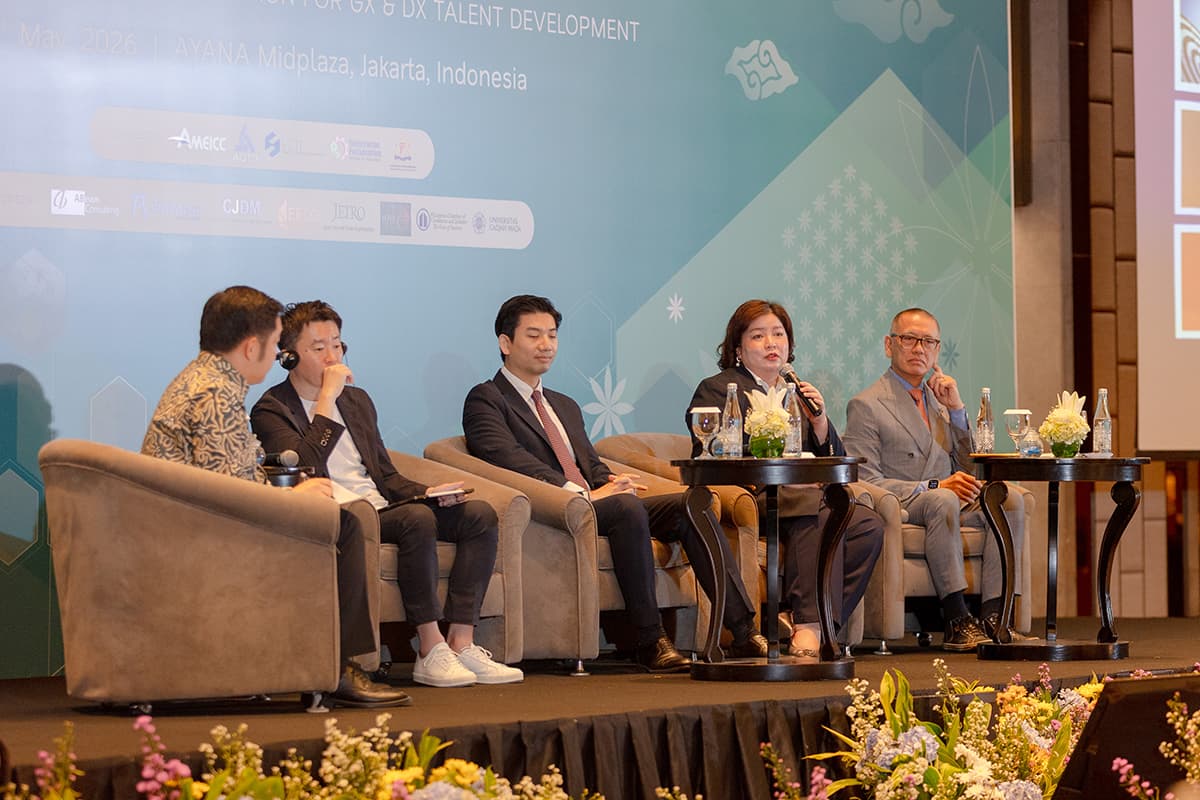
The session reiterated the importance of strengthening HRD ecosystem which requires practical use cases and active knowledge sharing among ASEAN Member States and Japan. Japan can play a vital role as a foundational partner through capacity building, institutional collaboration and sustainable talent development across the region. Key panelists shared their insights. Mr. Toyoshima Shuhei, Principle of ABeam Consulting Ltd/Sustainable SCM Strategic Unit, emphasized the growing significance of strategic investment in human capital as a long-term corporate asset, particularly for SMEs, while highlighting the need for stronger cross-country and cross-sector collaboration and greater practical opportunities for young talent development to meet evolving industrial workforce demands. Mr. Richard Yim, CEO of Cambodia-Japan Digitalized Manufacturing Centre (CJDM) highlighted its role in advancing Cambodia’s manufacturing sector through industry-academia-government collaboration, practical HRD programs with Japanese partners and support for SME and student training, thereby strengthening local talent, promoting sustainable industrialization, attracting FDI and enhancing ASEAN-Japan cooperation in regional upskilling and supplier network development. Dr. Cholachit Vorawangso Virakul, Assistant Secretary General of Eastern Economic Corridor Office (EECO) of Thailand underlined its integrated approach to industrial and human capital development under EEC framework, emphasizing strategic industry clusters, GX and DX transformation, education-focused urban development, and demand-driven workforce training. She also stressed the importance of collaboration with AMEICC/AOTS to strengthen Thailand’s competitiveness and promote effective ASEAN-Japan cooperation through institutional capacity building and industry-aligned HRD. Mr. Ferdinand A. Ferrer, President of the Philippine Chamber of Commerce and Industry (PCCI) reiterated the need for digital capacity enhancement, workforce upskilling, institutional collaboration. He emphasized that closer ASEAN-Japan cooperation on labor mobility and regional skills development is essential to address widening skill gaps and strengthen ASEAN’s position in advanced manufacturing and innovation.
The session discussed ASEAN’s progress in GX/DX and AI automation which depends heavily on strengthening human resource development, especially by equipping young people with digital and industry-relevant skills through collaboration among academia, industry and regional organizations. Indonesia’s large youth population is seen as a major strategic advantage, making internship programs, cross-border cooperation and practical learning experiences essential for building future-ready talent in the region. Key panelists consist of Mr. Henri Paul, Director of Politeknik Astra (ASTRAtech), Prof. Dr. Nakamura Masahiro, CEO and President of LEXER RESEARCH Inc., Dr. Arif Nurwidyantoro, Head of Undergraduate Computer Science Program, FMIPA UGM, and Mr. Ken Bima Satria Gandasasmita, Student of UGM (with internship experience at Japanese company).