
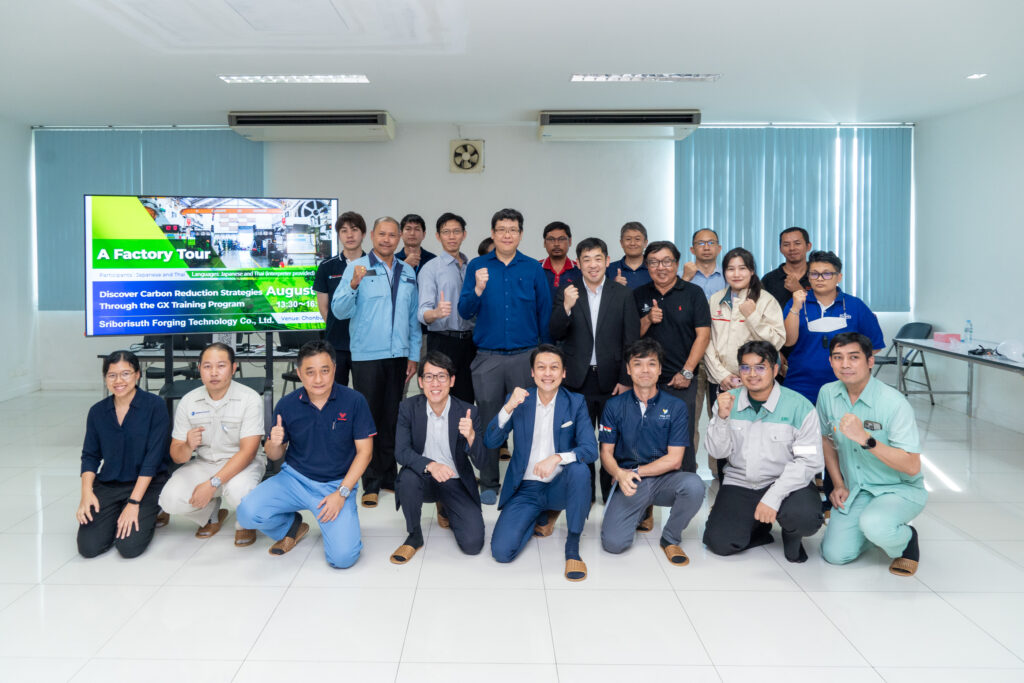
On August 5, as part of the “GX Human Resource Development Training” (subsidized by the Government of Japan) organized by For Delight (Thailand) Co., Ltd., a factory tour was held at Sriborisuth Forging Technology Co., Ltd., which had participated in the training last year. The event was attended by site representatives and managers from both Japanese and Thai companies.
This report highlights a case study from Thailand’s manufacturing sector, where GX training was utilized to achieve energy savings and CO₂ reduction, as well as the training content that supported these results.
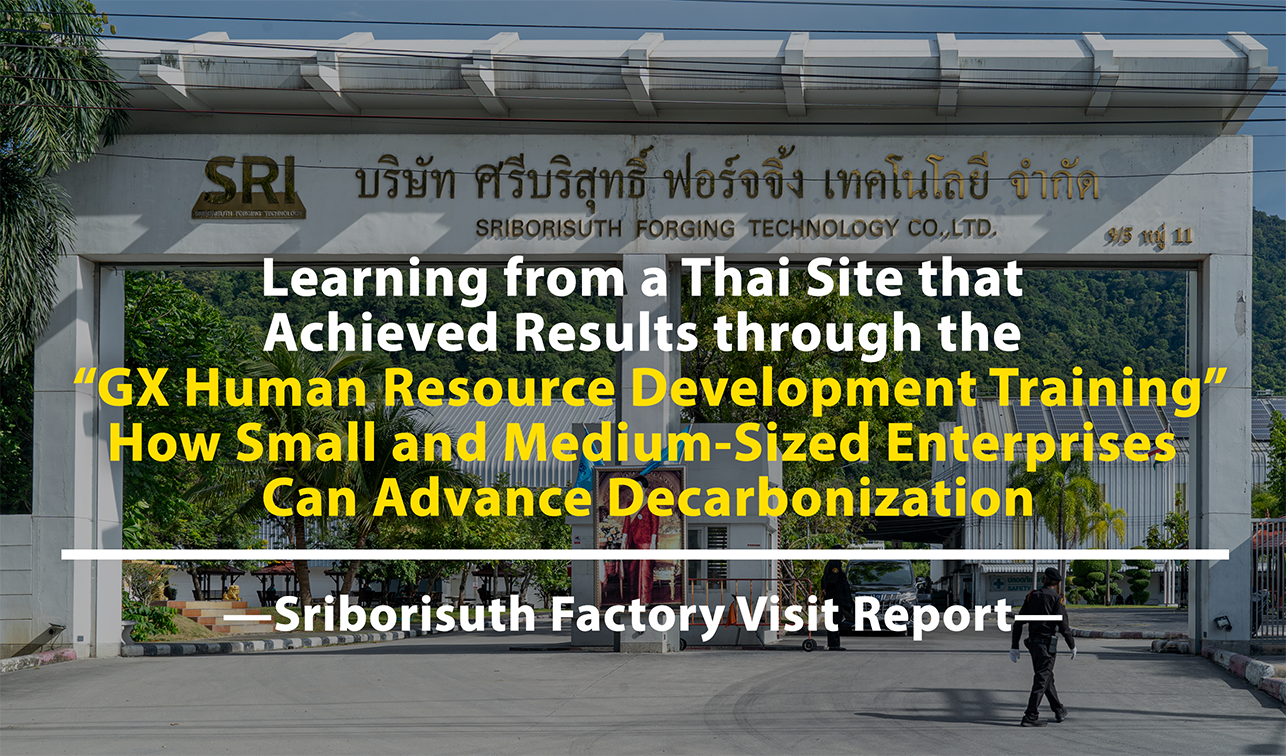
Sriborisuth, established in 2008, is a manufacturer of automotive parts using the hot metal forging process. Its main clients are Japanese companies that produce automobiles and automotive parts. The factory is located in Chonburi Province, which is the hub of the automotive industry in Thailand.
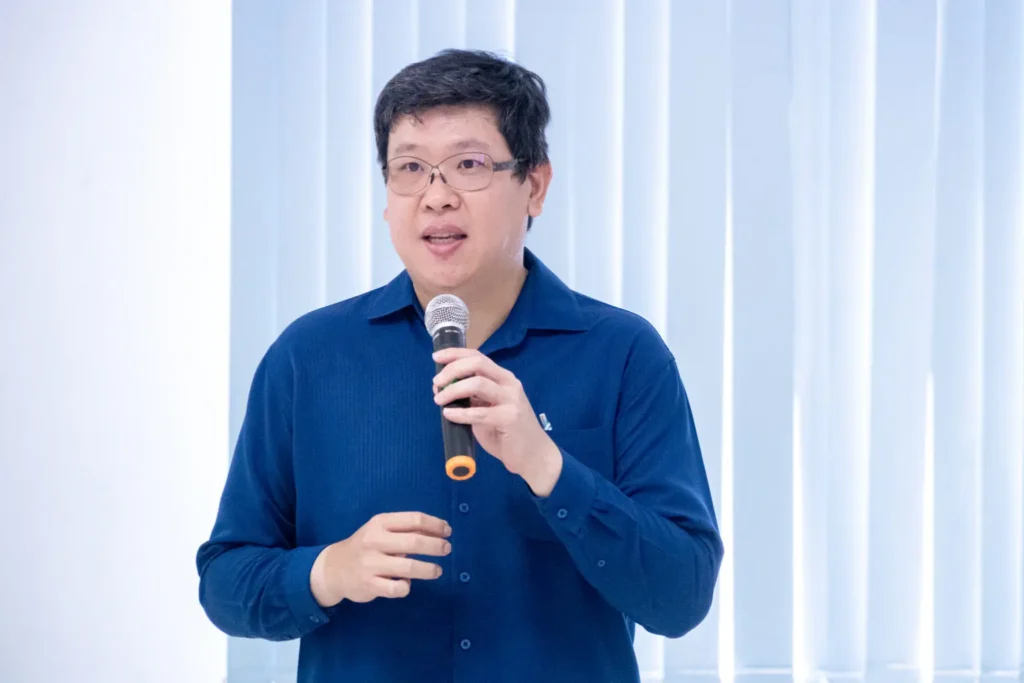
Mr. Chalermrat Sinborisut, Sriborisuth Forging Technology Co., Ltd.
At the beginning of the event, Mr. Chalermrat Sinborisut, the Managing Director of Sriborisuth, greeted the attendees and shared his reasoning behind the decision to participate in the training. He said, “The production of automotive parts through the hot metal forging process consumes a lot of electricity, which results in high carbon emissions. At the same time, carbon reduction has become a significant issue in both society and business. This led me to decide to join the GX training last year. In the automotive parts manufacturing industry, there are strict quality standards, so any improvements must be proven not to affect the product quality. Therefore, after conducting tests and continuously monitoring the quality of the products, we found no negative impact on the product quality. As a result, our company is now determined to extend these activities to other production lines.”
After the training, the company categorized its greenhouse gas emissions into three scopes (Scope 1-3) according to the standard. The company also installed an energy monitoring system using IoT technology, which helps accurately calculate the amount of greenhouse gas (GHG) emissions. It was found that emissions from the use of externally purchased energy, such as electricity (Scope 2), were significantly higher than emissions from internal activities (Scope 1). Currently, the company is collecting data to measure emissions from Scope 3, which is related to activities throughout the entire supply chain.
The data shows that electricity usage (Scope 2) is primarily attributed to the heating process for metal forging using electric furnaces (65%). The next largest contributors are energy used in the molding press machines and conveyor belts (15%) and air compressors (10%). This information has helped the company clearly define the scope for improvement and development. Energy reduction efforts were carried out between January and July, with the following results forecasted for 2025.
From these initiatives, it is estimated that energy consumption will be reduced by approximately 168,000 kWh, equating to about 700,000 THB per year, and carbon emissions will be reduced by approximately 105 tons by the end of 2025. Currently, the company has already reduced carbon emissions by 2.3% of its target of 3%. The company is now accelerating the expansion of these activities to other production lines in order to achieve the goal of reducing carbon emissions by 3% per year as set.
Next, Mr. Hiroyuki Fujii, Director of FD, the organizer of the training, took the stage to explain the GX training program. He highlighted two key points of the program:
As a result of last year’s energy-saving training, some companies achieved cost savings of up to 6.72 million baht annually.
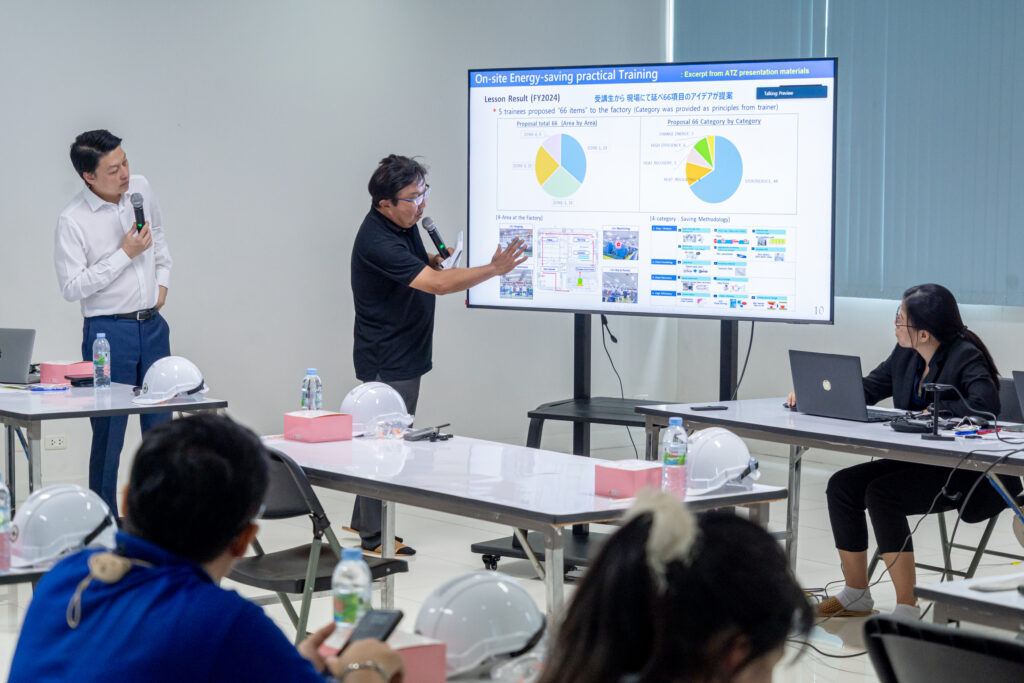
Mr. Yoshiaki Ishimoto, President of Act to Zero Institution (Thailand) Co., Ltd.,
who serves as the energy-saving instructor.
Mr. Yoshiaki Ishimoto, President of Act to Zero Institution (Thailand) Co., Ltd., who serves as the energy-saving instructor for the training, explained, “We adopt Toyota’s self-learning approach, emphasizing a style where participants take initiative in driving improvements.” He also shared, “In last year’s training, there were cases where participants created their own action plans, presented them to management, and secured the necessary budget.”
After the lecture, participants visited the Sriborisuth factory, where improvements had been implemented. Participants shared positive feedback such as: “I gained new ideas for improvements,” “I received a lot of useful information,” and “I would like to send my team members to the training.” This reflected a strong positive attitude toward GX initiatives.
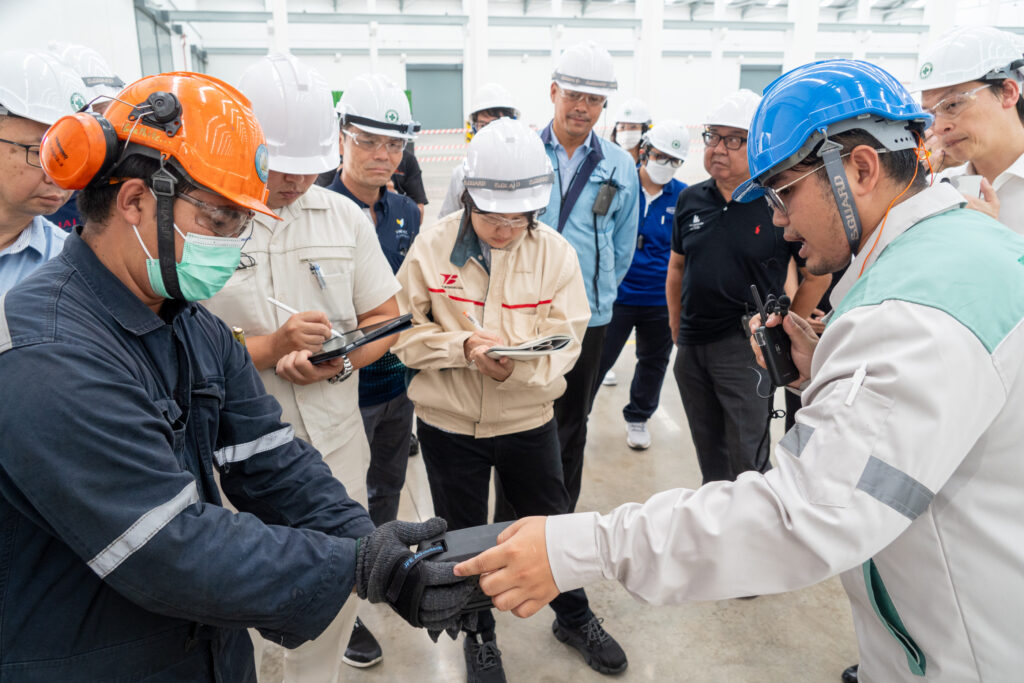
At the end of the tour, Mr. Chalermrat Sinborisut advised participants, “Air leaks are invisible, so if your factory hasn’t conducted a leak inspection yet, I strongly recommend doing so. By identifying points where air leaks occur, you can take corrective actions, which will lead to energy savings and cost reductions.”
Mr. Hiroyuki Fujii of FD also emphasized, “Start by accumulating cash through energy-saving activities, and gradually proceed with decarbonization. This training will help you generate short-term outputs while developing medium- and long-term action plans to ensure steady GX progress.” He called for participants to join the training.
For SMEs aiming to balance decarbonization with productivity improvement, developing practical skills that can be applied on-site and nurturing leaders who can sustain these efforts are the first steps in GX.
As part of the “ASEAN Support Program for GX/DX Human Resource Development” implemented by AMEICC Secretariat and AOTS, this training program aims to enhance practical skills in decarbonization and energy savings for local companies.
The program focuses on on-site training that emphasizes improvements at the workplace, allowing participants to learn low-cost, easily implementable improvement methods that can be applied immediately. The goal is to develop talent capable of driving GX (Green Transformation) initiatives.
Training for business people responsible for the decarbonization of local companies to learn knowledge and practical skills in GX
Duration :
(Batch 2) October 8 – January 15, 2026 (total 7.5 days) (Application Now Open.)
Location :
(Batch 2) Thai-German Institute (TGI) Amata City, Chonburi
Language :
Thai (Consecutive interpretation between Thai and Japanese)
Training fee :
30,000 Baht *Subsidy 15,000 Baht
>> for more information about this course, please Click HERE
*Eligibility for Subsidy: Employees of Japanese companies or their supplier companies and interns.
In this video, Mr. Ryosuke Fujioka, former Chief Representative of the AMEICC Secretariat and former Chief Representative of the AOTS Bangkok Office, explains the importance of “locally completed human resource development,” which underpins this training program. Packed with insights on how Japanese manufacturers can survive in the global market, this video is well worth watching alongside the article.
 OPEN CALL
 TRAINING PROGRAM
 SITE VISIT